Go ahead. Open your sent folder. I'll wait.
How many emails in there have a PDF attached? A product catalog, a pricing sheet, a company overview you spent two weeks getting right. You exported it, attached it, hit send, and then... nothing. No idea if anyone opened it. No idea if it loaded on their phone. No idea if it's sitting unread in a downloads folder somewhere next to a 2019 tax return.
That's not a content problem. Your content isn't the issue. The container is.
In 2026, the PDF is not dead — but as a marketing tool, it's on life support. And if your business is still relying on it to impress prospects and close deals, you're doing more work than you need to for worse results than you deserve.
Here's what's going on.
First, What Are We Actually Comparing?
A static PDF is a fixed document. Same everywhere, always. Adobe invented it in the early nineties so documents wouldn't fall apart when you sent them between computers. Brilliant for contracts. Sensible for forms. For marketing materials in 2026, it's a format built for a world that no longer exists.
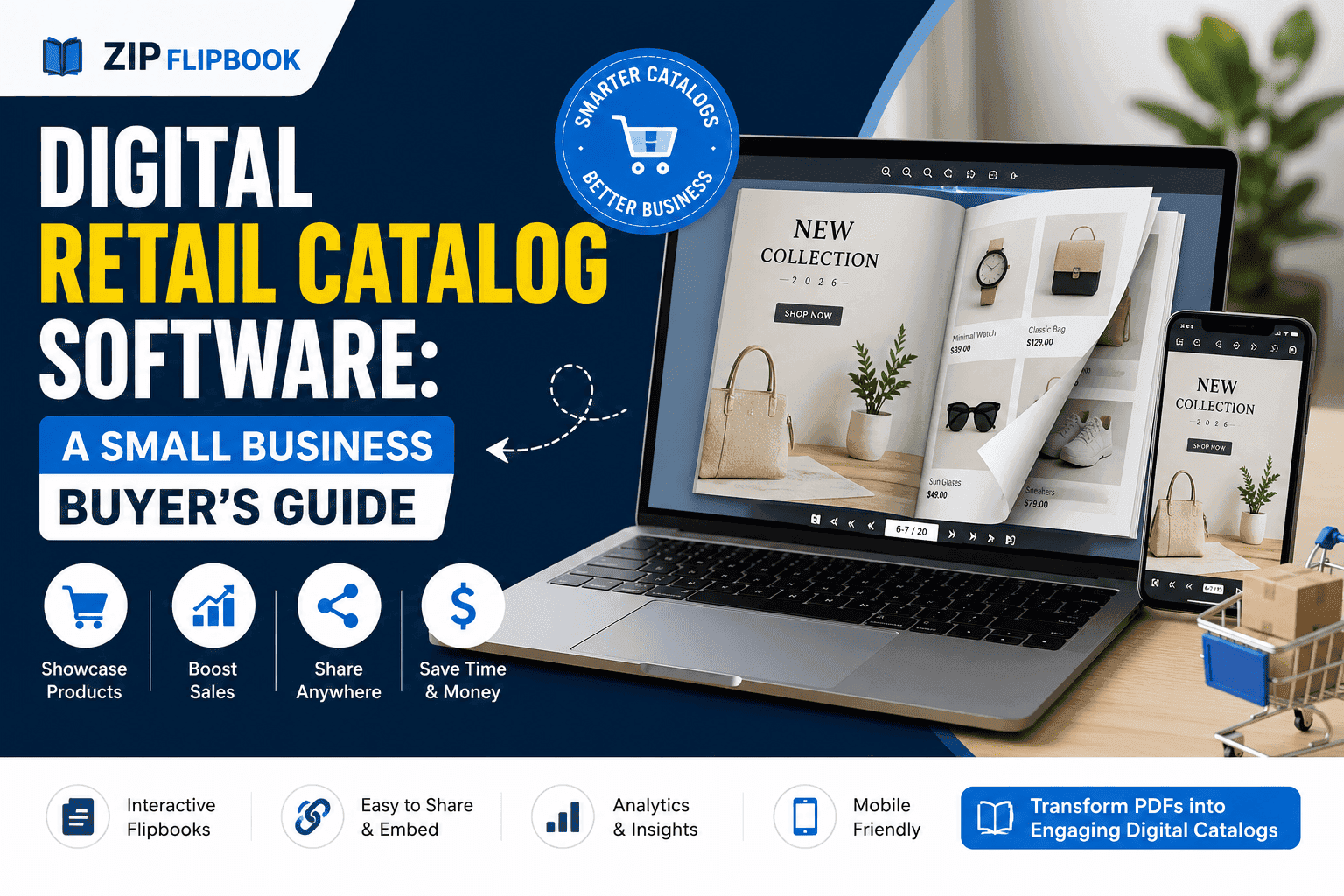
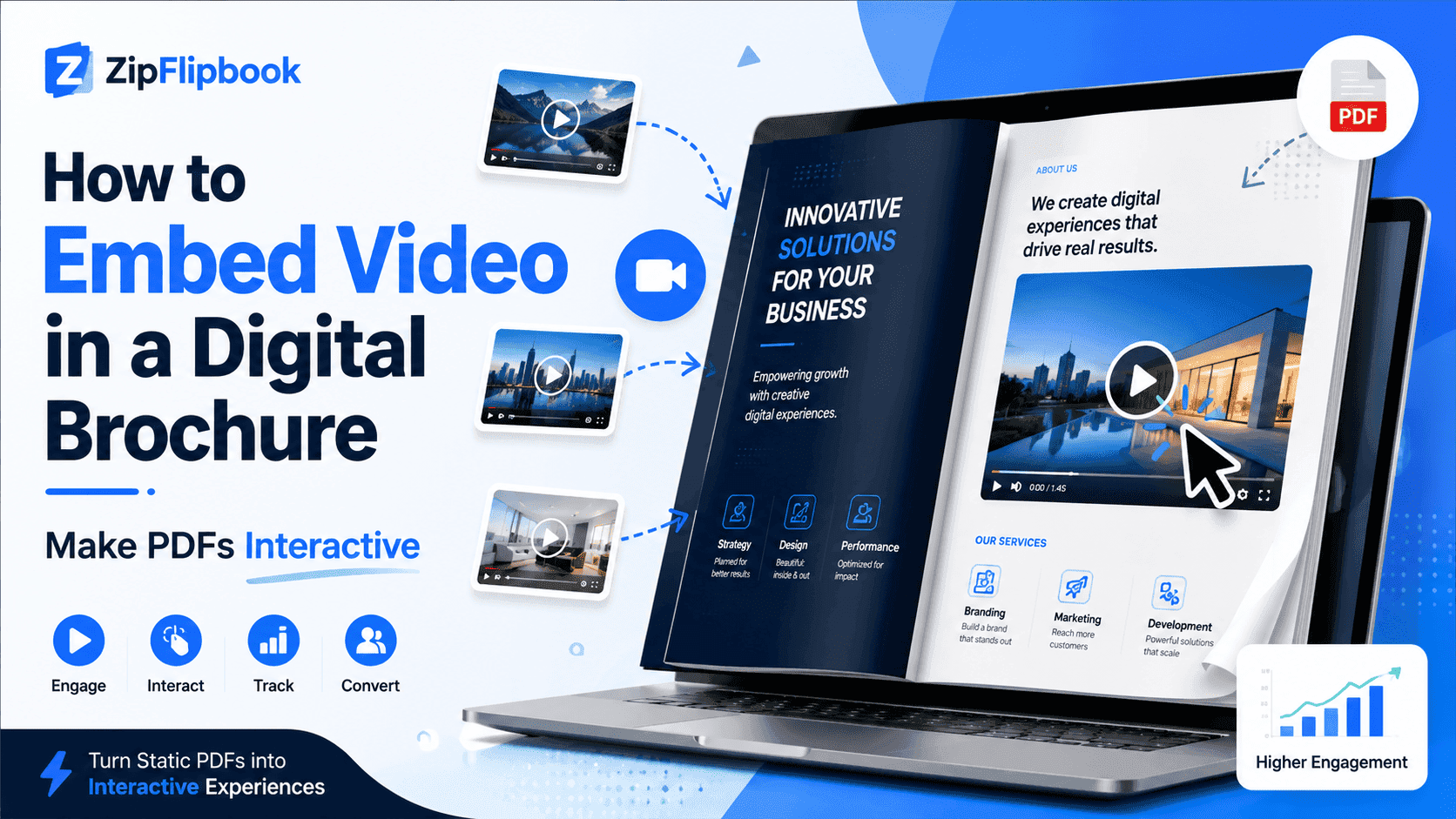
A digital brochure — the flipbook format that ZipFlipbook.com specializes in — is a web-based document at a shareable link. Pages that actually flip. Videos that play inline. Links that go somewhere. Loads in a browser, looks right on any screen, and tells you exactly how people engage with it afterward.
Same content. Completely different experience. And in marketing, experience is the product.
Reason 1: Nobody Is Opening Your PDF Attachments
Let's start with the one that stings a little.
Emails with attachments get flagged by spam filters, clipped by Gmail, and quietly ignored by people who've learned that PDFs from companies they vaguely remember meeting usually aren't worth the download. Even when someone does open yours, they're likely on their phone, pinching and zooming around a document designed for a desktop, giving up after less than a minute.
A digital brochure link skips all of that. One click, opens in the browser, works immediately on whatever device they're holding. No download. No file size warning. No "this PDF requires Adobe Reader" dead end.
The format change alone — before you've touched a single word of your content — increases the chance your material actually gets read. That's worth pausing on.
Reason 2: You're Completely Blind With a PDF
Quick question: when's the last time you actually knew someone opened a PDF you sent?
You don't. You send it, it disappears, and you spend three days wondering whether to follow up before sending a "just checking in" email that you both know is really "did you even look at the thing I sent you."
A digital brochure built on ZipFlipbook.com changes that entirely. You can see which pages held attention, where people dropped off, which links they clicked, and whether they came back for a second look.
That last one matters. A prospect who opens your brochure once is interesting. A prospect who opens it, leaves, comes back the next morning, and spends six minutes on your pricing page is someone worth calling today. Not Friday. Today.
Instead of following up blind, you follow up knowing what they read. That changes the whole conversation.
Reason 3: Your PDF Is Wrong and You Can't Fix It
Every business that's produced a printed brochure knows the feeling — you get the copies back from the print shop and three days later something changes. Price. Product. Contact number. Team member.
With a PDF, you're not much better off. You can update the file, sure. But every downloaded copy is the old version. Every email thread with the attachment is wrong. You can't reach into someone's downloads folder and swap the file out.
Update your brochure on ZipFlipbook.com and every shared link reflects the change immediately. The link you sent eight months ago to a prospect who just got back in touch? Current. The brochure embedded on your website? Current. The QR code on your trade show display? Also current — which is a particular relief if you've ever had to explain to someone at a booth why the QR code goes nowhere useful.
Three years ago this was a nice-to-have. In 2026? It's table stakes.
Reason 4: PDFs Look Terrible on Phones
Most business emails get opened on a phone first. The PDF you laid out carefully on your laptop — columns, small captions, text set tight because it looked clean in the design — gets rendered on a five-inch screen by someone in a car park.
Spoiler: it looks terrible.
PDF layouts are built around paper. A4 or letter-size pages forced onto a phone display at unreadable scale, or making the reader pinch and zoom just to follow one sentence to the next. Either way, most people close it inside 30 seconds and never come back.
Digital brochures on ZipFlipbook.com adapt automatically to whatever screen your reader is on. Phone, tablet, laptop — the text stays readable, images stay proportionate, and swiping through pages feels natural instead of frustrating. This isn't a "nice upgrade." It's the difference between a read and a rage-close.
Turn Your PDFs into Lead Generation Machines
Start getting highly-qualified leads from your PDFs and landing pages today. It takes exactly 2 minutes to set up.
No credit card required • Sign up in 10 seconds
Reason 5: A PDF Shows. A Digital Brochure Sells.
A PDF is passive. Someone reads it, gets interested, closes it, goes looking for your website, navigates to the right page, tries to find a contact form, gets distracted, means to come back later.
They don't come back.
With ZipFlipbook.com, every element in your brochure is a potential action. Product image links to the product page. Pricing section links to your booking calendar. "Get in touch" button opens a contact form without leaving the brochure. The gap between "reading about you" and "doing something about it" shrinks from a multi-step journey to a single click.
There's also something worth saying about the page-flip format specifically. It creates anticipation. People want to see what's on the next page in a way they simply don't when scrolling a flat document. That curiosity keeps them in your brochure longer. More time means more of your message lands. More of your message landing means more clicks, more inquiries, more deals.
Before they read a single word, your format already told them who you are. A PDF attachment says "I haven't thought much about your experience." A polished interactive flipbook says something different.
How to Actually Switch (It Takes About 10 Minutes)
If you already have a PDF — any PDF — you can have a digital brochure live today. Here's how it works on ZipFlipbook.com:
Upload your PDF. The platform converts it into a flipbook automatically. Page-turn animation, mobile optimization — all of it, without you touching a setting.
Customize the viewer. Add your logo, match your brand colors, set a thumbnail worth clicking. Fifteen minutes, maximum.
Add links. Go page by page and make clickable everything that should be clickable. Product images, CTAs, contact details. This is the step that turns a pretty document into something that actively generates leads. Don't skip it.
Share one link. Email campaigns, LinkedIn, your website, a QR code on a postcard — one link covers every channel, always points to the current version, never breaks.
Your Competitors Are Still Sending Attachments
A lot of them are. Still attaching PDFs. Still printing brochures with six-month-old pricing. Still with no idea whether a single prospect engaged with anything they sent.
When your prospect gets two follow-up emails after a meeting — one with a PDF attachment, one with a link to an interactive brochure that opens instantly on their phone and lets them book a call in one click — you don't need a marketing degree to know which one wins.
Before they read a single word, your format already told them who you are. Make sure it's saying the right thing.
Turn Your PDFs into Lead Generation Machines
Start getting highly-qualified leads from your PDFs and landing pages today. It takes exactly 2 minutes to set up.
No credit card required • Sign up in 10 seconds
FAQs
Are PDFs still worth using at all in 2026?
For the right things, absolutely. Contracts, invoices, formal reports, anything that needs to be signed or archived — PDF is still the right call. The problem isn't PDFs existing. It's using them for marketing when something demonstrably better is available and costs roughly the same amount of effort to produce.
I already have a PDF brochure. Do I have to redesign everything to switch?
No. That's the part most people get wrong. You upload your existing PDF to ZipFlipbook.com and it converts automatically. Your layouts, your images, your typography — all of it transfers. You're not starting over. You're upgrading the delivery format. The only optional extra work is adding clickable links, which takes maybe 20 minutes and is absolutely worth doing.
How hard is it to actually upgrade to a digital brochure?
Easier than you're imagining. If you can attach a file to an email, you can upload a PDF to ZipFlipbook.com. The conversion is automatic. Customization is straightforward — logo, colors, thumbnail. The whole process from upload to shareable link is under 15 minutes for most people. The hardest part is deciding to do it, which you've already done by reading this far.
Will a digital brochure actually perform better, or is this just a format trend?
It performs better because it removes friction at every stage — opening it, reading it on mobile, sharing it internally, taking action from it. Trends come and go. Removing friction from your sales process is not a trend. A format that loads in one click, works on any device, and lets someone book a meeting without leaving the document will outperform an email attachment basically every time.
What if my industry is traditional — finance, law, manufacturing? Does this still apply?
Especially then. Traditional industries are exactly where a polished interactive brochure stands out most, because the bar is so low. If every competitor in your space is sending the same tired PDF proposals, showing up with something that opens beautifully, looks professional, and lets the reader take immediate action isn't just an upgrade — it's a differentiator. Some of the strongest use cases for ZipFlipbook.com are in industries that haven't changed their marketing materials since 2014.
Try It
Take any PDF you already have. Upload it at zipflipbook.com right now.
Two minutes. See what it looks like.
You'll have a hard time going back to attachments after that.
Done with static PDFs? Visit zipflipbook.com and turn your first brochure into a flipbook — free.